Tisha B’Av—Beyond the Ruins
11 × 14 Photographic Print — $29.99
The print is professionally produced on premium photographic paper, capturing the vibrant colors and intricate details of the original artwork. Shipping is available within the United States only.
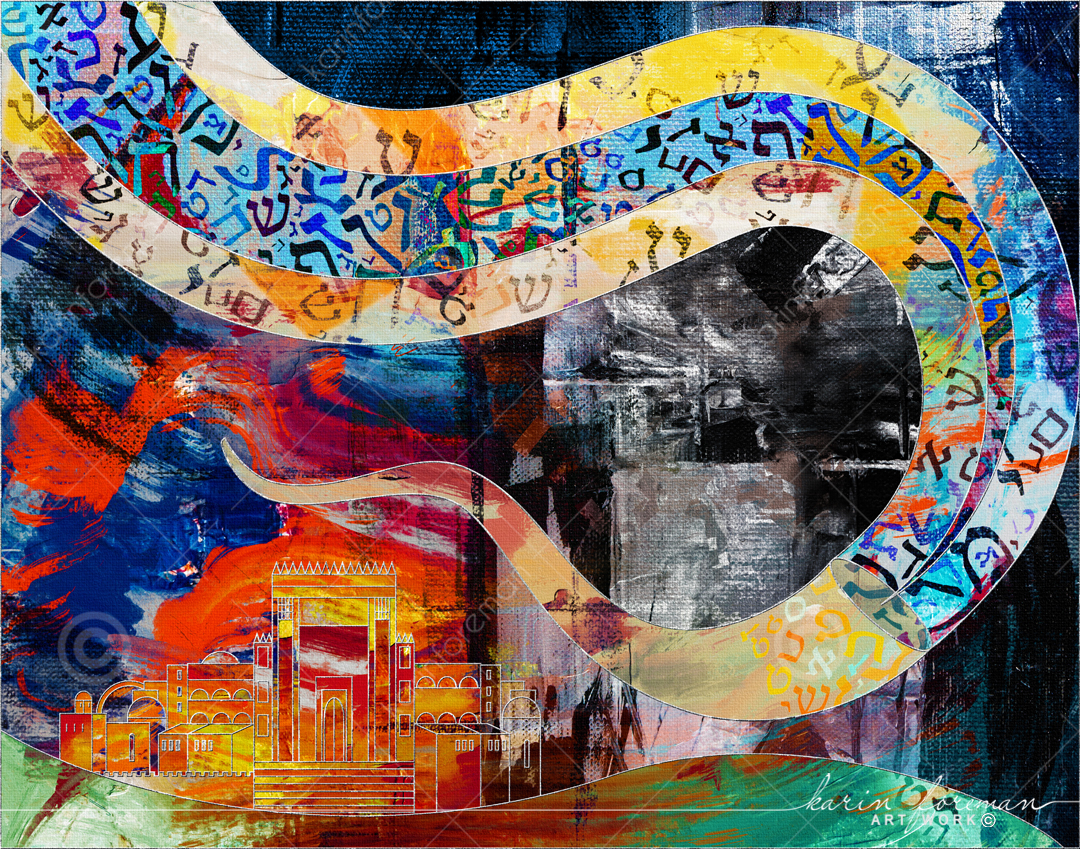
This mystical mixed-media artwork reflects the solemnity of Tisha B’Av, the Jewish day of mourning commemorating the destruction of the First and Second Temples in Jerusalem. Rather than portraying the past as a distant historical event, the composition brings destruction, memory, grief, and hope into a single visual landscape.
The artwork is created in a layered mixed-media and contemporary expressionist style, combining bold painterly brushwork, collage, distressed textures, Hebrew lettering, and luminous architectural linework. The rough, fragmented surfaces evoke the feeling of history that has been broken apart and preserved in fragments, while the sweeping bands of color create a sense of movement through time.
At the center is the destruction of Jerusalem and the Temple. Its monochromatic character contrasts sharply with the vivid colors surrounding it by flames. The darkness represents mourning, loss, exile, and the painful memory preserved through generations. Yet the darkness is not allowed to consume the entire composition.
The Temple appears below in brilliant gold and red, almost glowing against the surrounding darkness. Its placement is significant: the Temple is not simply depicted as something destroyed, but as something remembered and continually carried within Jewish consciousness. The architectural drawing resembles a memory emerging from the ashes, suggesting that what was physically destroyed cannot necessarily be erased spiritually.
Flowing across the artwork are ribbons filled with Hebrew letters and fragments of Jewish visual language. They can be understood as streams of memory, prayer, Torah, and generations of Jewish voices moving through history. Some letters appear clearly while others are partially obscured, suggesting how history is remembered through fragments, stories, prayers, and inherited memory. The ribbons also resemble winding paths or rivers, carrying the Jewish people from catastrophe toward renewal.
The colors themselves create an intentional tension. Deep blues, blacks, and grays evoke mourning and destruction, while fiery oranges and reds suggest the flames of Jerusalem and the anguish of catastrophe. In contrast, gold, turquoise, green, and luminous yellow introduce life, holiness, and the possibility of restoration. The painting therefore refuses to remain entirely in darkness.
One of the most meaningful elements is the small, luminous Temple against the enormous surrounding field of destruction. Its scale may suggest vulnerability, but its brightness gives it another meaning: holiness can survive even when its physical structures are lost. What was destroyed can become something remembered, studied, mourned, and ultimately transformed into a source of resilience.
The sweeping forms also suggest tears, wind, flames, and spiritual currents. They prevent the composition from feeling static. Tisha B’Av becomes not merely a commemoration of something that happened, but a journey through grief. The eye travels repeatedly between destruction and beauty, darkness and color, brokenness and rebuilding.
At its heart, the artwork embraces the dual character of Tisha B’Av. There is genuine darkness in remembering: destruction, exile, suffering, displacement, and the loss of sacred spaces are not minimized or romanticized. Mourning gives those losses a place in Jewish memory. Yet remembrance can also become an act of strength. Tisha B’Av gathers generations around a shared history and transforms memory into communal identity, reflection, and hope.
The artwork’s central message is therefore not simply that the Temple was destroyed, but that destruction was not the end of the story.
The darkness remains visible. The wounds remain part of the memory. But so does the light.
In this sense, Tisha B’Av becomes a passage between destruction and rebuilding, mourning and resilience, remembrance and hope. The fragmented Hebrew, the surviving Temple, and the luminous colors emerging from the darkness together suggest a distinctly Jewish idea: we remember what was lost without surrendering our vision of what can yet be restored.
Remembering the darkness, choosing the Light is ultimately an invitation to mourn honestly while continuing to choose life, faith, community, and hope.